


The origins of the idea of money are not traced to a particular day or occasion; rather, it has a lengthy and intricate history. Rather, money developed over time as a tool to support commerce and financial exchanges. This is a quick synopsis of how money has evolved over time:
- **System of Barter:**
Prior to the invention of money, people traded directly for goods and services through barter. Barter was limited, though, since it required the desires of both parties to coincide—that is, one must want what the other had to offer.
- **Fiat Currency:**
Societies started utilizing commodity money, which had intrinsic worth, to get around the drawbacks of barter. Common goods used as a medium of exchange included livestock, salt, silver, and gold. These goods were valuable in and of themselves and were generally accepted.
- **Metal Coins:**
Metal coins were widely used as trade increased. It is thought that around the seventh century BCE, the Lydians introduced the first metal coins. These coins had uniform weights and were composed of a mix of silver and gold.
- **Cash on Paper:**
Paper money has been around since the Tang Dynasty (618–907 CE) in China. Promissory notes and bills of exchange were first used by traders and merchants as a more portable and handy form of payment. Later, paper money made its way to Europe and the Middle East, among other regions of the world.
- **Banking and Notes:**
Banks first appeared in medieval Europe as organizations that published paper notes that claimed ownership of a specific quantity of precious metal that the bank owned. These banknotes gained widespread acceptance as money throughout time.
- **Fiat Currency:**
The 20th century saw the shift from money backed by commodities to fiat money. Fiat money is not supported by a tangible good and has no inherent value. Rather, the faith and trust of those who use it determine its value. The majority of today’s currencies are fiat ones, such as the euro and the US dollar.
- **Cryptocurrencies and Digital:**
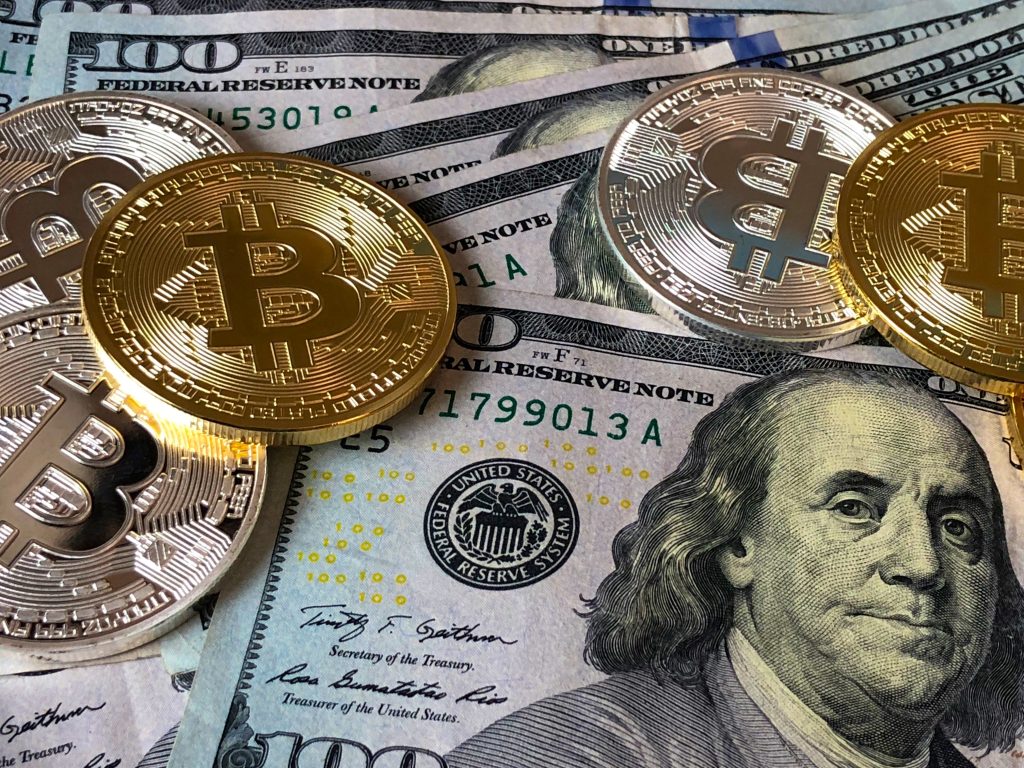
Digital currencies like Bitcoin and virtual bank accounts have become more and more popular in recent years. These digital or electronic currencies rely on cryptography to safeguard transactions and are available in both forms.
The demands of societies, as well as developments in trade and technology, have shaped the money’s dynamic evolution. Although the precise forms of money have evolved over time, their basic function as a means of exchange and a store of value has not altered. The evolution of money has been a dynamic process shaped by the needs of societies, advancements in technology, and changes in economic systems. While there isn’t a single inventor of money, its development has been a collective and ongoing human endeavor.
In an economy, money performs a number of vital roles as a store of value, unit of account, medium of exchange, and standard for postponed payments. These roles help to make economic transactions easier and support the smooth operation of the modern economy. The main purposes of money are as follows:
Mode of Transaction:
The purchasing and selling of goods and services is made easier by the widespread acceptance and standardization of money as a means of exchange. It makes transactions more efficient by doing away with the necessity for barter, where people would have to trade one good for another.
Account Unit:
Money offers a common unit of measurement for valuing and pricing commodities and services. Because prices are expressed in a single monetary unit, people can quickly comprehend and contrast the relative values of various goods.
Value Store:
Over time, money can be utilized as a repository of value and kept in storage. People can keep or save money for investments, future purchases, or unanticipated costs. Money’s worth may fluctuate due to inflation, but in the short to medium term, it usually keeps its ability to store value.
The Deferred Payment Standard
Currency acts as a benchmark for upcoming payments. Payment conditions in terms of a monetary unit are frequently specified in contracts, loans, and other financial agreements. As a result, both people and companies may confidently commit to future transactions.
Promotes Economic Effectiveness:
Economic transactions are far more efficient when money is involved. Because people can specialize in particular abilities or manufacture particular items and services, knowing they can use money to buy what they need, it allows for a more flexible and specialized division of labor.
Mobility:
Money is a convenient way to conduct transactions because it is lightweight and easy to carry. Money allows people to conduct transactions without the need for laborious and impractical exchanges of tangible items, as contrast to barter, which requires direct exchanges of physical goods.
Strength and Flexibility:
Coins and banknotes are examples of tangible money that are made to be strong and resilient to deterioration. Additionally, because money is easily divided into smaller amounts, it can be used for a variety of sized transactions.
Encourages Specialization
Economic specialization is facilitated by money since it allows people and companies to concentrate on their areas of expertise. People can work in specialized fields and exchange the results of their labor for a wide variety of items and services in a monetary economy.
Facilitates Economic Development:
The use of money encourages investment, entrepreneurship, and innovation, all of which lead to economic growth. It gives people and companies a way to generate money, amass capital, and take part in profitable endeavors that advance economic growth as a whole.
In conclusion, money is an essential instrument that supports economic activity since it may be used as a store of value, a unit of account, a medium of exchange, and a standard for postponed payment. Modern economies are more flexible, efficient, and growing as a result of its many roles.